Plan Your Trip
Tell us the trip you want — we match you with the right boat and captain.
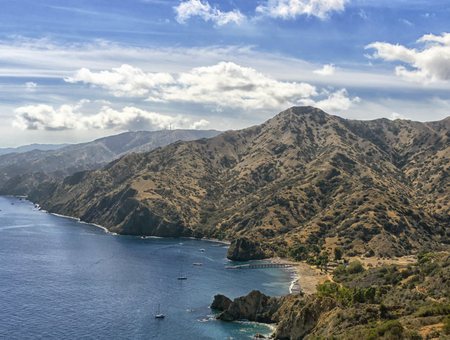 Catalina Island — 22 miles offshore, and a different fishery every season of the year. (310) 622-2830 |
Catalina fishes year-round — but what you catch, and how, changes completely with the season. Here is the honest month-by-month picture from people who plan trips around this island.
Catalina Island fishes twelve months a year — but it is really four different fisheries wearing one name. The island that gives up trophy white seabass over squid beds in April is not the island where yellowtail crash surface iron in August, and neither resembles a quiet winter morning of calico bass in the kelp. Timing your trip to the season is the single biggest decision you will make — bigger than the boat, bigger than the gear. Here is the honest month-by-month picture, the way locals plan around it.
If you can only pick one window, make it May through October. That stretch stacks the most species on top of each other: the tail of the seabass run, the full yellowtail season, peak calico bass, and — in warm-water years — tuna pushing up to the backside. If you want the single richest month, late June through September is when Catalina earns its reputation. But every season has a legitimate reason to go, and the "off" months have one big advantage: you will share the island with a fraction of the summer fleet.
Winter Catalina is a calico bass and bottom-structure game — with one major exception. Rockfish are closed January 1 through March 31 in the Southern California management area, so the winter menu is kelp-line species: calico and sand bass (open year-round), California sheephead, whitefish, and halibut on the sandy flats. It is also the heart of spiny lobster season, which runs from early October into mid-March — hoop-netting after dark is a winter Catalina tradition. White seabass scouts start watching the squid beds late in the season, but the real seabass game is a spring story.
Spring is when Catalina regulars cash in their patience. As squid spawn along the island, white seabass — the island's ghost, and the most prized inshore fish on the coast — feed over the beds, mostly at gray light and at night. Our white seabass guide covers that fishery in depth. Two practical notes: seabass carry a 28-inch minimum size, and a reduced one-fish limit applies during the peak spring months — your captain will confirm the current rule before you fish. On April 1 the rockfish season opens (see our 2026 rockfish season guide), calico bass get aggressive as the water warms, and the first barracuda and bonito schools usually show late in the season.
This is the Catalina of the brochures, and it delivers. Yellowtail set up on the classic spots — frontside kelp lines, the West End, Farnsworth Bank on the backside — and the five techniques in our yellowtail techniques guide all come into play, from fly-lined sardines to surface iron when fish boil on bait. Calico bass are in full spawn mode in the kelp (catch-and-release on the big breeders is the island ethic). Barracuda and bonito keep rods bent between the quality bites. And when warm water pushes in, yellowfin and bluefin tuna work the backside and the offshore banks within a full-day run of the island. Summer is also the busiest season — book the boat, and the trip length, early: a 3/4-day trip covers the frontside well, but the backside and Farnsworth really want a full day.
Ask Catalina regulars for their favorite month and most say September or October. The water is still warm, yellowtail linger into fall, late-season tuna are a real possibility, and the summer crowds vanish. Two seasonal switches flip in fall: lobster season opens in early October, and from October 1 the rockfish fishery goes offshore-only — deeper water beyond the 50-fathom line, which pairs naturally with a full-day island trip. November is the transition: bass and bottom fish carry the day as the island resets for winter.
| Month | Best bets at Catalina |
|---|---|
| January | Calico bass, sheephead, halibut; lobster (rockfish closed) |
| February | Calico bass, whitefish, halibut; first seabass scouting |
| March | White seabass over squid beds; bass; lobster until mid-month |
| April | White seabass peak; rockfish opener (Apr 1); calico warming up |
| May | Seabass tail, first yellowtail, barracuda arrive |
| June | Yellowtail, calico spawn, bonito; tuna possible offshore |
| July | Peak yellowtail and calico; tuna on the backside in warm years |
| August | Peak everything — yellowtail, calico, barracuda, tuna chances |
| September | Yellowtail linger, warm water, fewer boats; tuna late season |
| October | Yellowtail tail, offshore rockfish, lobster opener |
| November | Transition: bass, deep rockfish, lobster |
| December | Calico, sheephead, halibut; lobster; rockfish until Dec 31 |
For the coast-wide picture beyond the island, see our Los Angeles fishing seasons guide and the seasonal fishing calendar.
The island is about 22 miles from the mainland harbors, so trip length decides which Catalina you get. A 3/4-day is the frontside trip: kelp lines, calico, bonito, and inshore yellowtail. A full day unlocks the backside, Farnsworth Bank, and the offshore look for tuna — the right call in summer and fall. Winter and spring specialty trips (seabass at gray light, lobster after dark) are about timing more than distance. Not sure which fits your date? That is exactly what we sort out when you plan a trip — tell us your date and target species, and we will match you with the right boat and captain when booking opens. You will also need a California sport fishing license; our charter license guide explains what to get.
For most anglers, June through September — yellowtail and calico bass are at their peak, the weather windows are kindest, and warm-water years add tuna on the backside. May and October are the shoulder-season sweet spots with fewer boats.
Yes. Winter is calico bass, sheephead, whitefish, and halibut, plus spiny lobster hoop-netting (season runs early October to mid-March). The main winter closure to know: rockfish are closed January 1 through March 31 in Southern California.
A 3/4-day trip covers the front side of the island well. For the backside, Farnsworth Bank, or an offshore look at tuna, book a full day — the extra hours are what make those spots reachable.
Spring — roughly March through June, when seabass feed over spawning squid beds. It is a low-light, patience fishery; seabass have a 28-inch minimum size and a reduced one-fish limit during the peak spring months.
Spirit Sportfishing is reader-supported. When you buy through links on our site, we may earn an affiliate commission at no extra cost to you.
© 2026 Spirit Sportfishing. All rights reserved.